
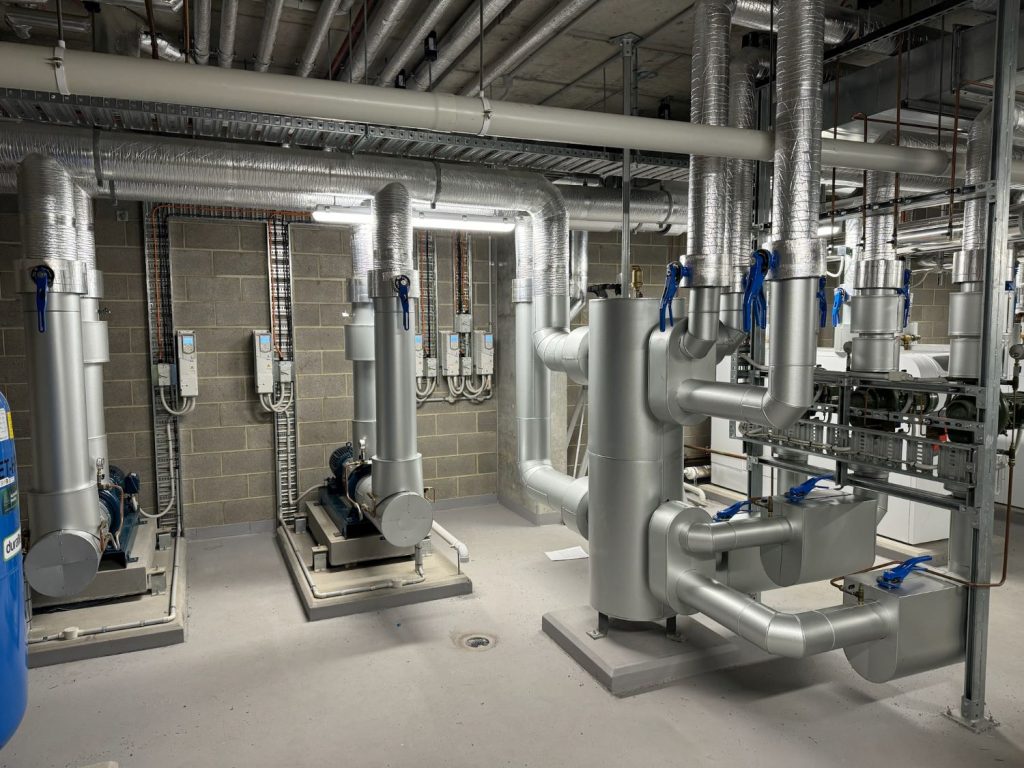
Technical guide
Insulation materials, cladding finishes and the products we install, in one place.
Insulation materials
Which material suits which service.
Polyethylene foam (PE)
Best for: Chilled and heating hot water, condenser waterClosed cell, so it resists moisture. The most common choice for commercial CHW and HHW pipework.
Elastomeric rubber (Armaflex)
Best for: Refrigeration, small bore chilled water, fan coil connectionsFlexible and built in vapour resistance, good for tight runs and fittings.
Phenolic and PIR sections
Best for: Large chilled water mains, chillers, plant roomsHigh performance for a thinner section, factory made to the pipe size.
Glasswool
Best for: Ductwork, heating hot water, hydraulic noiseLight and economical, foil faced for duct and pipe.
Rockwool
Best for: Steam, condensate, high temperature, fire and acousticHandles high temperatures and adds fire and acoustic performance.
Loaded vinyl and acoustic composites
Best for: Sewer and stormwater pipes, fans, fan coil unitsDense lagging that blocks noise from pipes and plant.
Cladding finishes
What goes over the insulation, and where.
Zincalume
Use on: General external pipework and plantDurable, economical and the most common external finish.
Galvanised steel
Use on: Plant rooms and to the 2 m mechanical damage heightTough against knocks, foot traffic and trolleys.
Aluminium (plain or stucco)
Use on: Chillers, plant rooms, internal and external pipeworkLight, clean and neat, and does not rust.
Stainless steel 304 and 316
Use on: Coastal sites, generators, food and pharmaceutical plantsBest for corrosion, heat and hygiene. 316 for marine air.
Colorbond
Use on: Rooftop duct and pipe, matching existing plantPick a colour to match the building or existing services.
PVC
Use on: Internal pipework, hospitals, clean areasSmooth, washable and quick to install.
Products we install
Brands our crews use every day. We install to each manufacturer's details and tested systems.
Thermobreak
Sekisui FoamClosed cell sheet and pipe sections for chilled water, condensate and refrigeration, with a built in vapour barrier.
Manufacturer dataFlexiCell
Hira IndustriesCross linked polyethylene pipe sections for chilled and heating hot water and hydraulic services.
Manufacturer dataRockwool
Pipe sections and blanketStone wool for steam, condensate and high temperature plant, and for fire and acoustic performance.
Bradford glasswool blanket
CSR BradfordFoil faced glasswool blanket for external ductwork insulation.
Manufacturer dataFyreWrap
TrafalgarFire rated duct wrap for kitchen exhaust, smoke spill and fire rated ductwork, installed to the tested system.
Manufacturer dataSoundlag
Acoustic laggingLoaded vinyl acoustic lagging for sewer and stormwater pipes, fans and fan coil units.
Good practice we build in
- Continuous vapour seal on every chilled and refrigeration line, joints and fittings included
- Cladding to the 2 m mechanical damage height in plant rooms
- Falls, sealed joints and weatherheads on external duct and pipe so water runs off
- Removable covers on valves, flanges, strainers and pumps
- Fire rated systems installed exactly as tested, with records for the certifier
- Acoustic lagging to the acoustic consultant's report, not a guess
Common questions
What thickness of insulation do I need?
It depends on the service, the pipe size, the climate zone and the NCC Section J requirements in the specification. Send us the specification and we will tell you what it calls for and price exactly that.
Why does chilled water need a vapour barrier?
Chilled pipes are colder than the air, so moisture in the air condenses on them. Without a continuous vapour seal the water gets into the insulation, it stops working and the pipe corrodes. In humid climates like Queensland it is critical.
When does insulation need cladding?
Outside, anywhere it can be knocked or walked on, and in plant rooms up to the 2 m mechanical damage height. Cladding keeps out weather, UV and damage.
Can insulated valves still be serviced?
Yes. We make removable insulated valve, flange and strainer covers so they can be opened and closed again without damage.
Need help with a specification?
Send us the drawings and we will tell you what we would install, and why.
See our latest jobs on LinkedIn.